 OverTor
A cancellation policy your customers will actually respect
How to write a clear, fair appointment cancellation and no-show policy: a cancellation deadline, attendance tracking, limits for repeat no-shows, a follow-up message and a sample policy you can copy.
Every business that works by appointment knows this moment: the time passes, the chair is empty, and the customer isn't picking up the phone. One missed appointment is not the end of the world, but when it repeats a few times a week, you feel it in your income, in your schedule and in your mood. A clear appointment cancellation policy is not about punishment. It is about ground rules: customers know what is expected of them, the owner knows how to respond, and no one has to improvise an uncomfortable conversation. This article goes through the parts of a policy that works in practice, and ends with a sample text you can adapt to any business.
Why you need a written cancellation policy at all
Most customers don't skip appointments out of disregard. They forget, mix up the date, or simply don't know that canceling two hours before leaves the business with no way to fill the slot. Without a written policy, every case turns into a personal argument, and every decision looks arbitrary.
A written policy does three things:
- It sets expectations in advance, before the problem happens and not after.
- It makes equal treatment possible for all customers, so no one feels singled out.
- It takes the emotional load off the owner: there is no need to decide from scratch each time, the rules already exist.
A clear deadline for canceling and rescheduling
The heart of any policy is one deadline, simple and easy to remember: until when an appointment can be canceled or rescheduled with no problem. The deadline should fit the kind of business:
- A barbershop with two barbers and short appointments can settle for a few hours' notice, because a half-hour appointment is relatively easy to fill.
- A beauty salon or spa with long treatments needs earlier notice, because an open hour and a half is harder to fill at the last minute.
- A clinic that coordinates a room, equipment and staff will usually need a full day's margin.
The important rule: the deadline should be written as an exact number, for example "up to 12 hours before the appointment," and not in vague wording like "as early as possible."
Let customers cancel and reschedule on their own
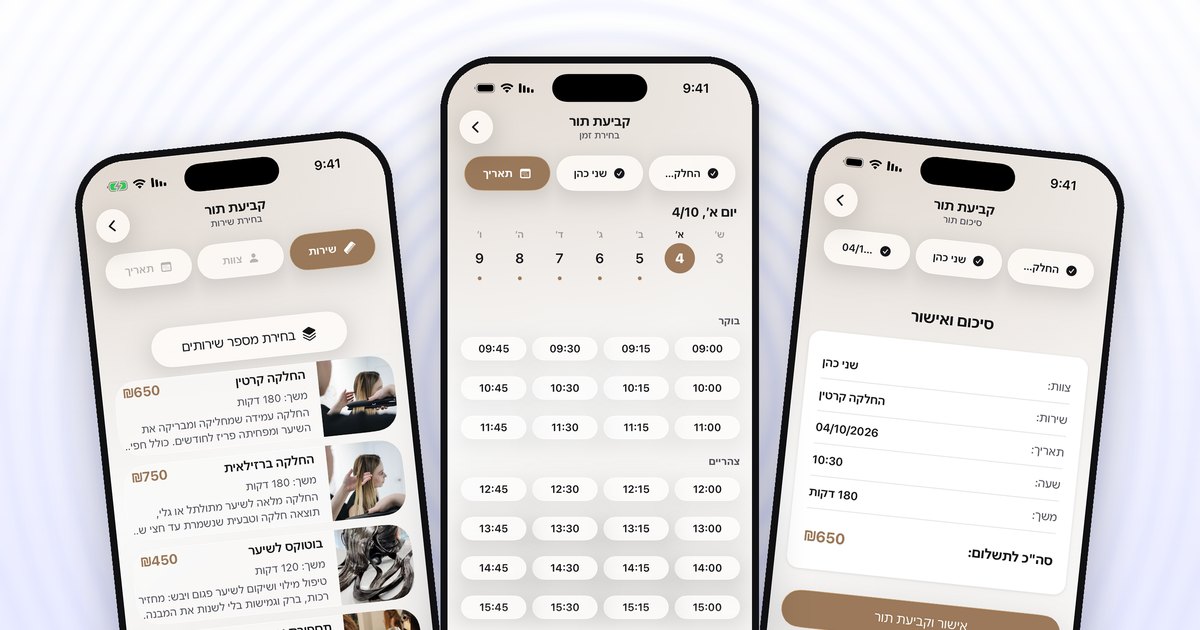
One of the common reasons for no-shows is simply that canceling is a hassle. You have to call, no one answers, the message gets forgotten, and in the end the customer doesn't come. When customers can cancel or reschedule on their own, in a few taps, they are far more likely to do it in time.
In OverTor the owner sets until when customers may cancel or change an appointment on their own, for example up to a certain number of hours before it. Until that deadline everything is open and simple, and after it the customer needs to contact the business. The flexibility stays, but there is a clear line. And combined with a smart waitlist, an appointment canceled in time can be offered automatically to another customer who was waiting for it.
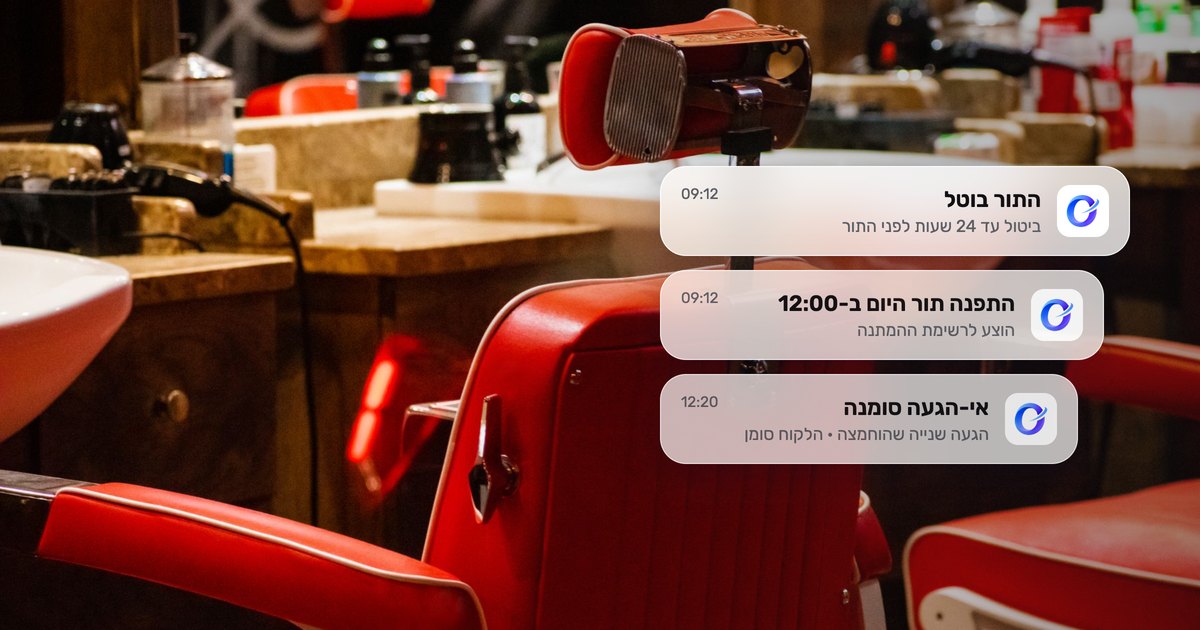
A reminder before the appointment helps a great deal too: a push notification that arrives before the deadline gives the customer a chance to remember and, if needed, to cancel in time instead of not showing up.
Attendance tracking and a clear threshold for repeat no-shows
A good policy tells the difference between a customer who missed once and someone who misses regularly. That takes tracking: who didn't show up, who was late, and how many times.
A fair no-show policy is usually built like this:
- A record of every no-show and late arrival, kept separately for each customer.
- A threshold set in advance, for example two no-shows within a certain period, after which the customer is flagged.
- A graduated response: first attention and a message, and only then a limit.
- A reset: after a period with no problems, or after a few good visits, the record resets.
This is exactly how it works in OverTor. The app tracks each customer's no-shows and late arrivals, and after the threshold the owner has set, the customer is flagged. You can also choose to limit booking for customers who miss appointments again and again, and the record resets after a period of time or after visits with no problems.
A limit that doesn't drive customers away
A limit is a powerful tool, so use it with care. The goal is to protect the calendar, not to punish. A few principles:
- Don't limit anyone over a first miss. It happens to everyone.
- Tell a late arrival from a no-show. Being ten minutes late is different from a chair left completely empty.
- Leave a way back. The reset after good visits lets the customer make things right, and that is what makes the policy fair.
- Use your judgment. A longtime customer caught in an unusual situation deserves different treatment from a new customer missing for the third time.
A polite follow-up message after a no-show
The moment after a missed appointment is an opportunity. A short, matter-of-fact message, with no blame, reminds the customer of the policy and opens the door to the next appointment. In OverTor the owner can send a follow-up message that they approve themselves, so the tone stays personal and right for the business.
A sample wording:
"Hi, we saw you couldn't make it to your appointment today. It happens. Just a reminder that you can cancel or reschedule on your own in the app up to 12 hours before, so we can offer the time to other customers. We'd love to see you at your next appointment."
A sample policy
You can copy it, adjust the numbers and publish it on your business page.
Cancellation and attendance policy
- You can cancel or change an appointment on your own in the app up to 12 hours before the appointment time.
- After that, changes are possible only by contacting the business directly.
- Arriving more than 15 minutes late may shorten the treatment or require booking a new appointment.
- We keep track of no-shows. After two no-shows without a cancellation, self-booking may be temporarily limited.
- The record resets after a number of visits with no problems.
Thank you for understanding. This is what lets us serve everyone on time.
For more ideas on dealing with late cancellations, it is also worth reading about how a beauty salon can cut down last-minute cancellations.
The bottom line
A good appointment cancellation policy is short, clear and fair. It includes an exact cancellation deadline, the option to cancel and reschedule on your own, attendance tracking with a defined threshold, a graduated limit for repeat no-shows, a reset for those who improve, and a polite follow-up message. When all of these work together, customers respect the rules because they understand them, and the calendar stays full.
Want all of this to happen automatically, with no spreadsheets and no uncomfortable conversations? You can download OverTor from the App Store or Google Play, open a business with a free trial and set up your cancellation and attendance policy in a few minutes.